


The American Medical Association Has Taken a Major Step Forward: Myopia Is Being Recognized as a Disease
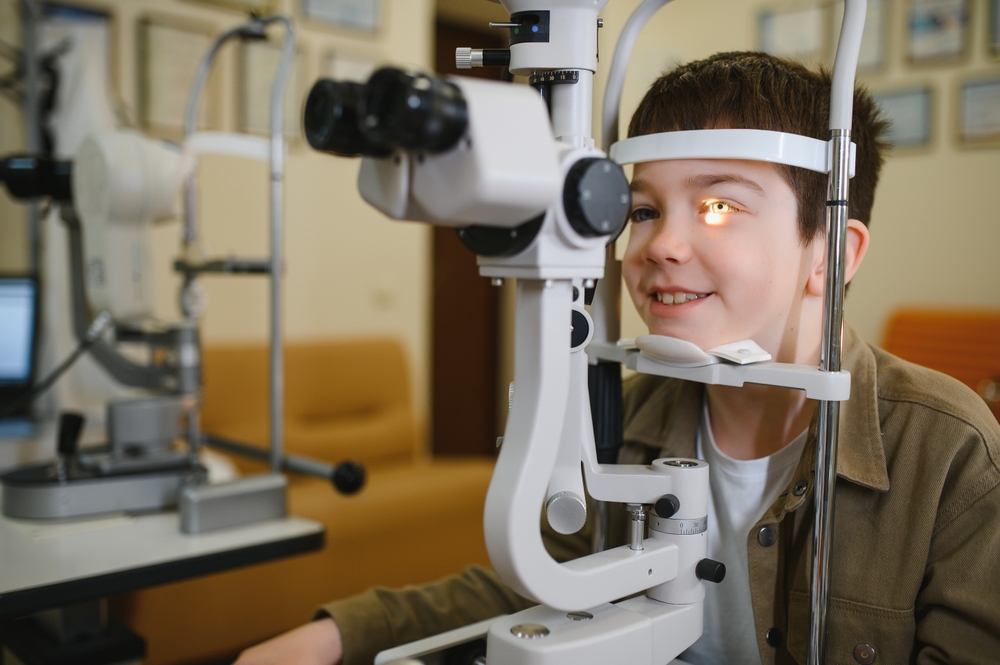
For generations, many people have thought of nearsightedness, or myopia, as little more than an inconvenience. If a child couldn't see the board at school, they got glasses. As their prescription changed, they received stronger glasses. It was simply considered a normal part of growing up.
Today, we know much better.
Myopia is not just a need for glasses. It is a progressive condition in which the eye grows longer than normal. As the eye elongates, the risk of developing serious eye diseases later in life increases. Children with higher levels of myopia are at greater risk for retinal detachment, glaucoma, cataracts, and myopic macular degeneration as adults.
That growing body of scientific evidence has led to an important milestone in American medicine.
Earlier this year, the American Medical Association (AMA) adopted Resolution 411, recognizing myopia as a significant and increasing public health concern. The resolution also supports formally classifying myopia as a disease, increasing public awareness of progressive myopia, and improving insurance coverage for treatments that have been proven to slow its progression.
Why Does Calling Myopia a Disease Matter?
Some parents wonder why this distinction is important.
The answer is simple.
Diseases are treated. Risk factors are managed. Prevention becomes a priority.
For decades, the standard approach to childhood myopia was simply to prescribe stronger glasses every year as the prescription worsened. That approach corrects blurry vision, but it does nothing to address the underlying condition causing the eye to continue growing longer.
Recognizing myopia as a disease shifts the conversation from simply correcting vision to actively managing a child's eye health.
It encourages physicians, educators, policymakers, and families to view progressive myopia as a medical condition that deserves early intervention rather than passive observation.
The AMA Also Recognized the Need for Public Education
The AMA's resolution goes beyond simply acknowledging that myopia is a growing problem.
It specifically calls for public education to help parents, caregivers, educators, and policymakers understand both the risks of progressive myopia and the availability of evidence-based treatments that can slow its progression.
This is an important change.
Many parents still have never heard the term "myopia management." They assume that stronger glasses each year are simply inevitable.
In reality, today's eye care providers have multiple scientifically supported options that can significantly reduce how quickly many children's prescriptions worsen.
Better Treatment Starts Earlier
One of the biggest lessons researchers have learned over the past two decades is that timing matters.
The earlier myopia management begins, the greater the opportunity to slow progression while the eyes are still developing.
That means regular comprehensive eye examinations are more important than ever, especially for children who have one or both parents with myopia or whose prescriptions increase year after year.
Vision screenings can identify children who may need glasses, but they are not designed to evaluate progressive myopia, measure eye growth, or determine whether treatment is needed.
Nearly Twenty Years of Helping Children Manage Myopia
At Bright Eyes Family Vision Care, we've believed that myopia should be treated as more than "just needing stronger glasses" for almost 20 years.
Long before myopia management became widely recognized, we began offering specialized treatments designed to slow the progression of nearsightedness in children.
Today, we provide individualized care using the full range of evidence-based treatment options, including FDA-authorized Essilor Stellest lenses, specialty contact lenses, low-dose atropine eye drops, and combination therapies when appropriate.
The AMA's recognition of myopia as a disease reflects what pediatric eye care providers have seen firsthand for years. Progressive myopia deserves more than a new pair of glasses every year. It deserves thoughtful, proactive care aimed at protecting a child's vision for a lifetime.
If your child's prescription seems to increase every year, or if myopia runs in your family, we'd be happy to discuss whether myopia management is appropriate. The earlier treatment begins, the more we can do to help protect your child's long-term eye health.


OFFICE HOURS
| Monday | 9:00am - 5:00pm |
| Tuesday | 9:00am - 5:00pm |
| Wednesday | 9:00am - 6:00pm |
| Thursday | 9:00am - 5:00pm |
| Friday | 9:00am - 5:00pm |
| Saturday | By Appointment Only |
| Sunday | Closed |
OFFICE HOURS
| Monday | Closed |
| Tuesday | 9:00am - 5:00pm |
| Wednesday | 9:00am - 6:00pm |
| Thursday | 9:00am - 5:00pm |
| Friday | Closed |
| Saturday | By Appointment Only |
| Sunday | Closed |
© 2026 Bright Eyes Family Vision Care All rights Reserved. Privacy Policy Sitemap
Powered by
