


Falling Behind in the Classroom? Why Simple School Screenings Miss Binocular Vision Dysfunction and Eye Tracking Disorders
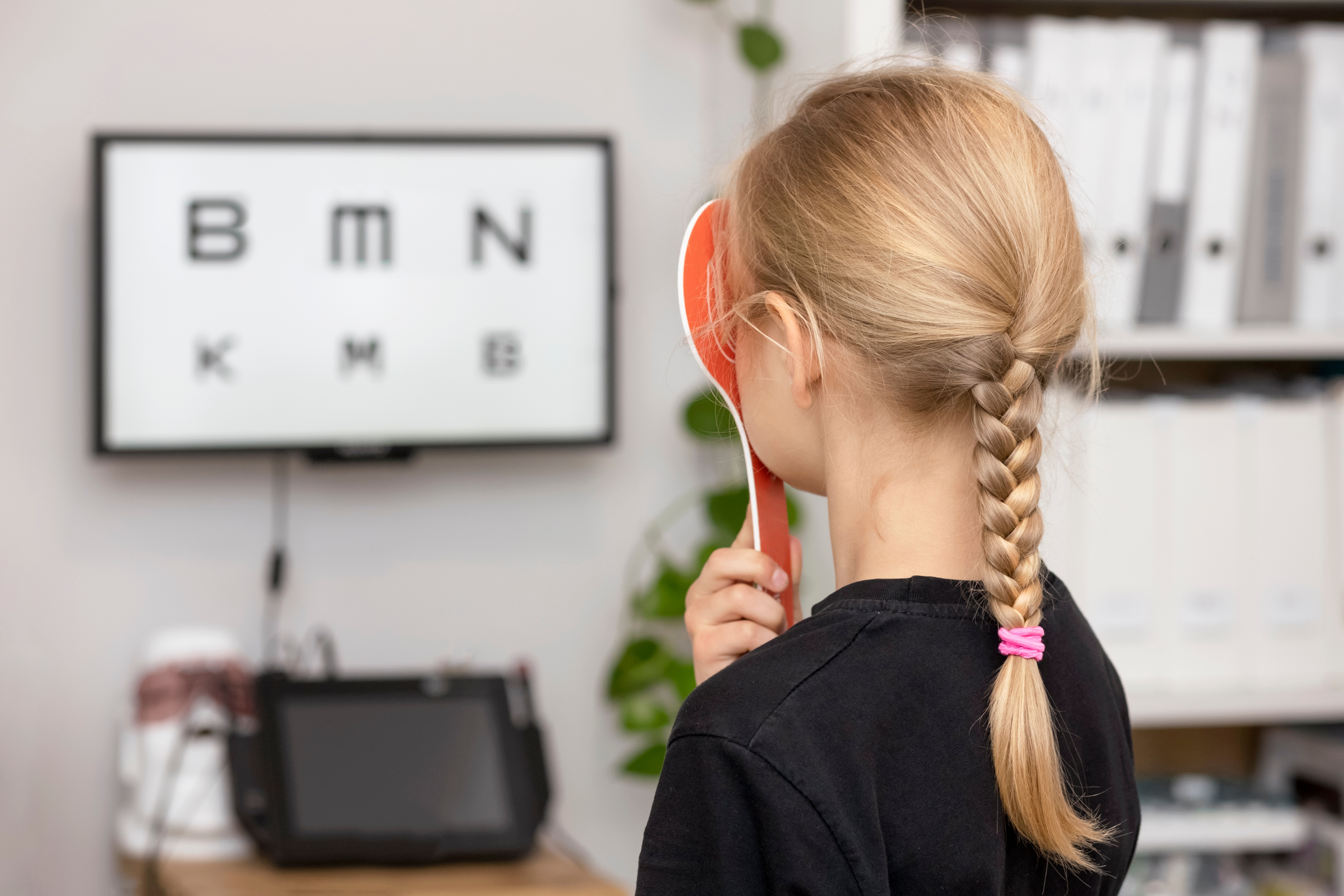
When a child struggles with reading, homework, or staying focused in the classroom, vision may not be the first concern. In fact, there may be a false sense of security after children passed a school vision screening. However, seeing clearly does not necessarily mean the entire visual system is working efficiently. Binocular vision dysfunction and eye tracking disorders can affect how comfortably and accurately a child uses their eyes for reading and other close-up schoolwork. At Bright Eyes Family Vision Care and Bright Eyes Kids, Dr. Jordan, Dr. Beth, or Dr. Nate look beyond basic visual acuity to evaluate how the eyes focus, move, and work together.
Why Passing a Vision Screening May Not Tell the Whole Story
Most basic vision screenings are designed to identify problems with visual acuity (resolution), such as difficulty seeing letters from a distance. This is valuable, but classroom vision requires several additional skills.
A child needs to coordinate both eyes, shift focus between the board and a book, follow lines of print, and maintain comfortable near vision for extended periods. Difficulties with these skills may not be detected during a standard school screening.
Signs of Binocular Vision and Eye Tracking Problems
Children do not always recognize that their vision feels different from anyone else's. Instead, parents and teachers may notice behaviors such as:
• Losing their place or skipping words while reading
• Using a finger to follow text
• Complaining of headaches or tired eyes after reading
• Avoiding homework or close-up activities
• Frequently rereading lines or sections
• Closing or covering one eye
• Struggling to copy information from the board
• Having difficulty maintaining attention during visually demanding tasks
These symptoms can have several possible causes, which is why a comprehensive evaluation is important.
What Is Binocular Vision Dysfunction?
Binocular vision refers to the ability of both eyes to work together as a coordinated team. When eye alignment or coordination is inefficient, the brain may receive visual information that is difficult to combine comfortably.
A binocular vision dysfunction can contribute to symptoms such as double vision, eyestrain, headaches, difficulty concentrating, and discomfort during reading. Other problems may involve focusing skills or convergence - the ability to bring the eyes together for near work.
How Eye Tracking Disorders Can Affect Reading
Eye tracking, also called oculomotor function, allows the eyes to move smoothly and accurately across a page. Efficient tracking helps a child move from word to word and line to line without unnecessarily losing their place.
When tracking skills are weak, reading can require more effort. A child may understand the material but struggle with the visual demands involved in getting through the page efficiently.
How Vision Therapy Can Help
When an evaluation identifies specific visual skill difficulties, vision therapy may be recommended. Vision therapy is an individualized program designed to improve how the eyes and brain work together.
Depending on the child's needs, therapy may target eye teaming, focusing, tracking, visual processing, and other functional vision skills. Rather than simply improving eyesight with glasses, vision therapy focuses on developing more efficient visual abilities for everyday activities.
If your child is struggling with reading, schoolwork, eye strain, or other possible signs of a binocular vision or eye tracking problem, schedule an evaluation with Dr. Jordan, Dr. Beth, or Dr. Nate at Bright Eyes Family Vision Care and Bright Eyes Kids to learn whether vision therapy may help. Visit our offices in Tampa, FL, or call (813) 792-0637 to book an appointment today.


OFFICE HOURS
| Monday | 9:00am - 5:00pm |
| Tuesday | 9:00am - 5:00pm |
| Wednesday | 9:00am - 6:00pm |
| Thursday | 9:00am - 5:00pm |
| Friday | 9:00am - 5:00pm |
| Saturday | By Appointment Only |
| Sunday | Closed |
OFFICE HOURS
| Monday | Closed |
| Tuesday | 9:00am - 5:00pm |
| Wednesday | 9:00am - 6:00pm |
| Thursday | 9:00am - 5:00pm |
| Friday | Closed |
| Saturday | By Appointment Only |
| Sunday | Closed |
© 2026 Bright Eyes Family Vision Care All rights Reserved. Privacy Policy Sitemap
Powered by
